Spring Flood Prevention Guide for Tucker Homeowners in Tucker, GA
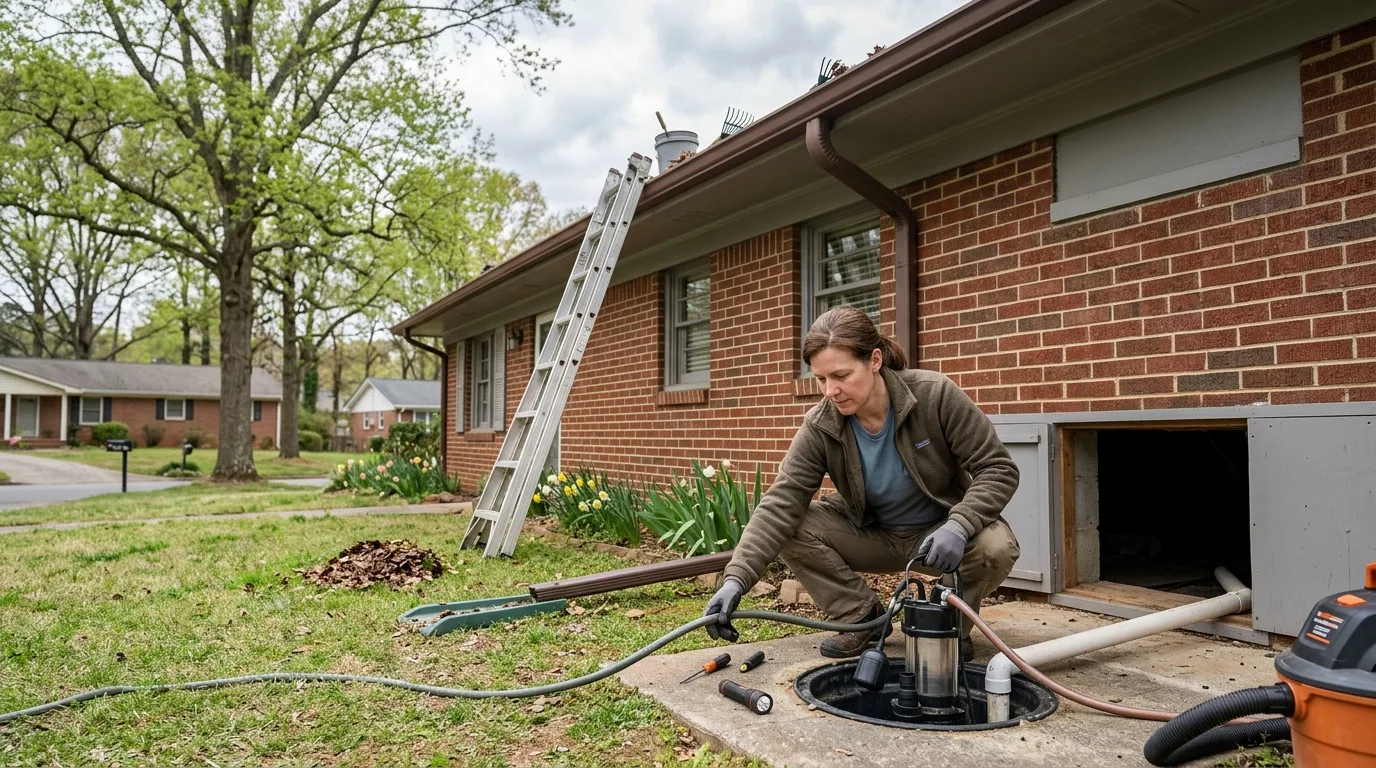
Every spring, Tucker homeowners who didn’t prepare in February and March end up calling for emergency water extraction in April and May. Georgia’s spring storm season is the highest-risk period for basement flooding, foundation intrusion, and stormwater damage in DeKalb County — and most of the damage is preventable with targeted preparation before the rains start. This guide covers the specific steps Tucker homeowners should take each year, why Tucker’s clay soil makes spring particularly dangerous, and what to do if prevention isn’t enough.
Spring Flooding in Tucker? We're Ready 24/7
Call (888) 376-0955 for emergency water extraction and flood damage cleanup throughout Tucker and DeKalb County.
Why Spring Is Tucker’s Highest-Risk Flood Season
Spring flood risk in Tucker isn’t simply about rainfall volume — it’s about timing. By March, Tucker’s red clay soil has absorbed months of winter precipitation and is already at or near field capacity. When spring storms deliver additional rainfall onto saturated soil, water cannot infiltrate downward fast enough and instead runs laterally across the surface toward the lowest available collection point — which is often a Tucker home’s foundation or basement window.
Tucker receives approximately 50 or more inches of rainfall annually, with spring months contributing significantly to that total. Spring storm events in Georgia often deliver 2 to 4 inches of rain in a few hours, generating surface runoff that overwhelms gutters and drainage systems designed for typical rainfall rates. Combined with Tucker’s documented above-average tornado risk, spring weather events can cause both flooding and structural wind damage simultaneously. For homeowners in the Kelley Cofer Park area and throughout DeKalb County, preparation before March is the most cost-effective flood protection available.
Types of Spring Flooding in Tucker
Surface runoff flooding: Stormwater runs across the yard and into the home through doors, windows, or foundation gaps when surface drainage is inadequate or overwhelmed.
Basement seepage: Saturated clay soil generates hydrostatic pressure against foundation walls, pushing water through cracks and wall-floor joints. This is the most common flood type for Tucker homes with basements.
Crawl space flooding: Ground moisture and surface water collect in unprotected crawl spaces under Tucker homes, saturating floor joists and creating mold conditions.
Drainage backup flooding: Overwhelmed municipal storm drains reverse and back water into basement floor drains and low-elevation fixtures.
Gutter overflow damage: Clogged gutters overflow against the house, saturating exterior walls and directing concentrated water toward the foundation perimeter.
Spring Flood Prevention Checklist for Tucker Homeowners
Clean gutters and downspouts (February): Remove debris from gutters and ensure downspouts extend at least 6 feet from the foundation. In Tucker’s spring, a single clogged downspout can direct hundreds of gallons of water against the foundation during a storm. Check that downspout extensions are directing water away from the foundation and not toward adjacent areas that drain back to the house.
Inspect and regrade low spots in the yard (February-March): Walk your yard during or after a rain and identify any low spots where water pools within 10 feet of the foundation. Soil settles over time, creating collection points that didn’t exist when the home was built. Adding topsoil to low spots and sloping away from the foundation at 6 inches per 10 feet redirects surface water before it reaches the foundation perimeter.
Test your sump pump (February): Pour water into the sump pit to confirm the pump activates, the discharge line is clear, and the check valve is functioning. Test battery backup systems by disconnecting power and confirming the battery engages the pump. Tucker’s spring storms regularly cause power outages — a sump pump without a working battery backup is ineffective during the events when you need it most.
Check foundation walls for new cracks (March): Tucker’s winter freeze-thaw cycles can open new cracks in foundation walls that weren’t present last spring. Walk the full basement perimeter looking for new horizontal, stair-step, or vertical cracks. Photograph and measure any cracks found — this documents baseline condition for insurance purposes and identifies issues to address before the wet season.
Clear window wells (February-March): Basement window wells fill with debris over winter. Clean them out and verify that well drains are clear. Consider installing window well covers to prevent direct rain accumulation.
Inspect crawl space (March): Check that existing vapor barriers are intact and that no new water has pooled in the crawl space from winter events. Look for new wood rot or mold growth that indicates persistent moisture. Ensure crawl space vents are functional and not blocked by debris.
Review flood insurance coverage (January-February): Standard homeowners’ insurance does not cover flooding from exterior sources — it requires a separate NFIP or private flood insurance policy. Review your coverage before flood season. If your Tucker property is in a flood zone, confirm your policy is current and adequate for your home’s current rebuild cost.
Pre-Season Basement Inspection in Tucker
Tucker Water Damage Restoration offers pre-season moisture inspections to identify flood risk before spring arrives. Call (888) 376-0955.
Process: Responding to Spring Flooding in Tucker
If spring flooding does reach your Tucker home, the response process matters as much as the preparation:
Immediately: Shut off electrical circuits serving flooded areas if you can do so without entering standing water. Do not wade through standing water in areas with active electrical circuits. Call for emergency water extraction immediately — do not wait to assess the full scope.
Within the first hour: Move valuable items to upper levels or dry areas. Do not place fans in flooded areas — this can spread mold spores if mold has begun to colonize wet surfaces.
First 24 hours: Professional extraction and initial structural drying should begin within this window. Tucker’s humid climate means the 24-to-48-hour mold growth deadline is real, not theoretical. For more detail, see why mold remediation in Tucker must happen within 24–48 hours.
Within 72 hours: Wet drywall, carpet, and insulation that cannot be dried in place should be removed to prevent mold establishment. Professional moisture readings confirm whether materials are salvageable or require removal.
Cost Factors: Spring Flood Prevention vs. Restoration
A sump pump installation for a Tucker basement runs $500–$1,500. An interior French drain system runs $4,000–$8,000. Emergency water extraction and structural drying for a typical Tucker basement flood event runs $3,000–$10,000 for mitigation alone — before reconstruction. The math strongly favors prevention for Tucker homes with any history of basement water intrusion.
Tucker’s Georgia red clay soil means that prevention investments — drainage systems, sump pumps, crawl space encapsulation — deliver consistent returns because the hydrostatic pressure driving basement flooding is a permanent feature of the soil environment, not a random event. For a deeper explanation of why clay soil drives this pattern, see our post on Tucker’s red clay soil and basement water intrusion.
Frequently Asked Questions
When should I install a sump pump in my Tucker home?
The best time to install a sump pump is before your basement floods — ideally in fall or early winter before Tucker’s high-risk spring season. If your Tucker basement has flooded even once, a sump pump with battery backup is a minimum investment that makes economic sense given local spring flood risk.
Does flood prevention work prevent all spring flooding in Tucker?
No prevention system eliminates all risk in Tucker’s clay soil environment. Well-maintained gutters, proper grading, and an operational sump pump significantly reduce flood risk and severity. A catastrophic spring storm that delivers 4+ inches of rain in a few hours can overwhelm any surface drainage system. The goal is to handle typical events and minimize the severity of extreme events.
How do I tell if Tucker spring flooding is covered by my insurance?
Contact your insurance agent before flood season with this specific question: “Does my policy cover water damage from basement seepage, surface flooding, or storm drainage backup?” The answer matters for how you respond to a flood event. See our guide on insurance claims for water damage in DeKalb County for detailed guidance.
Spring Flood Protection for Tucker Homes
Tucker Water Damage Restoration provides inspections, prevention recommendations, and emergency flood response. Call (888) 376-0955.
Related: