Why IICRC-Certified Water Damage Restoration Matters in Tucker, GA
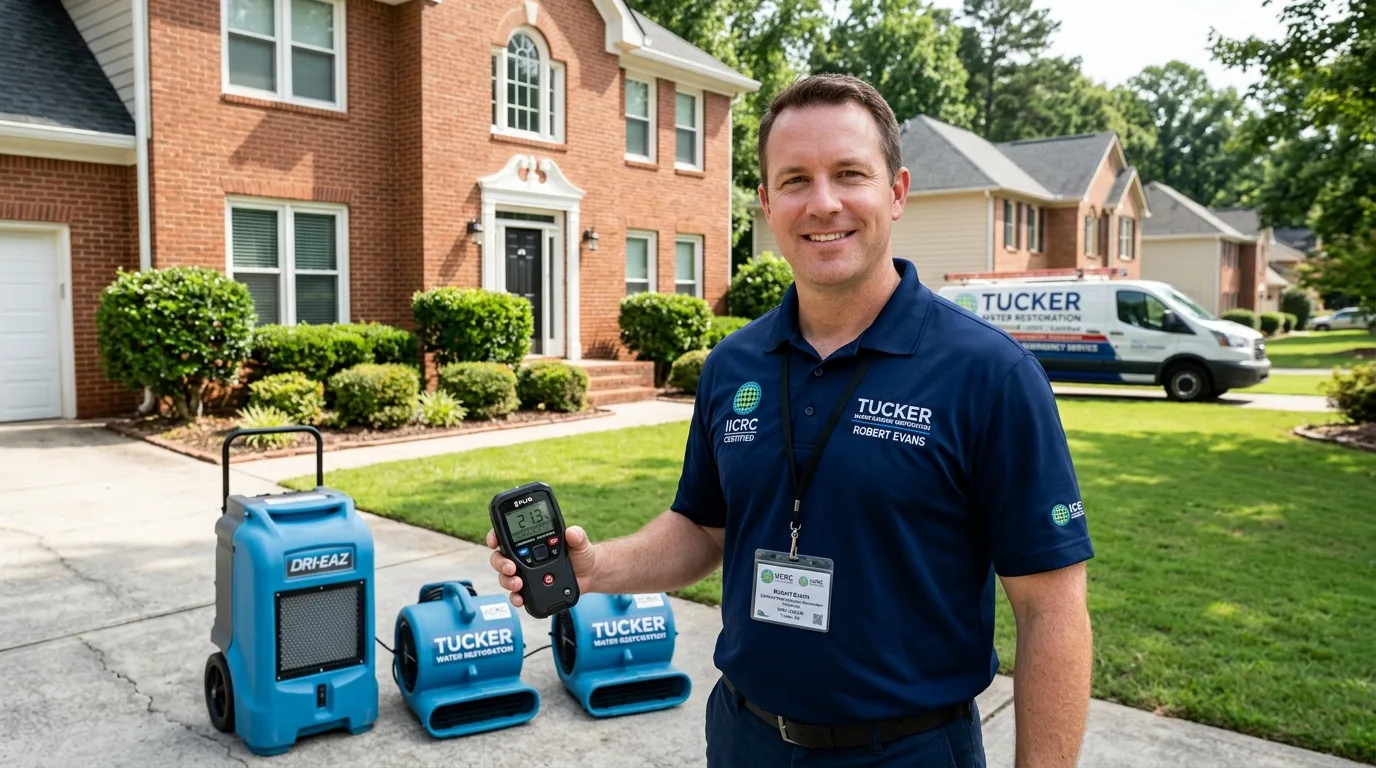
If you’ve called multiple water damage restoration contractors in Tucker, GA, you’ve probably heard the word “IICRC” multiple times — but what does that certification actually mean, and why does it matter for your property in DeKalb County? This post explains exactly what IICRC certification covers, how it translates into better outcomes for Tucker homeowners, why uncertified contractors create specific risks in Georgia’s humid climate, and what questions to ask any contractor before letting them work on your home.
IICRC-Certified Water Damage Restoration in Tucker
Every Tucker Water Damage Restoration technician holds current IICRC certifications. Call (888) 376-0955 for certified response throughout DeKalb County.
What IICRC Certification Means
IICRC stands for the Institute of Inspection, Cleaning and Restoration Certification — the global professional organization that sets standards for the restoration industry. IICRC is not a trade association that anyone can join; it is a credentialing body that issues certifications to individuals who complete specific training programs and pass competency examinations. Certifications must be renewed periodically, and IICRC maintains continuing education requirements to keep credentials current.
The certifications most relevant to water damage restoration in Tucker are:
WRT (Water Damage Restoration Technician): The foundational certification covering water damage science, moisture measurement, psychrometrics (the science of drying), equipment operation, and documentation protocols. Every technician involved in water damage restoration in Tucker should hold this certification.
ASD (Applied Structural Drying): Advanced certification covering the physics of structural drying, monitoring protocols, and the calculations that determine appropriate drying equipment configuration for a specific environment. Tucker’s humid climate makes ASD credentials particularly important — drying equipment positioned and calibrated without psychrometric knowledge produces inadequate results in high-humidity conditions.
AMRT (Applied Microbial Remediation Technician): Covers mold remediation protocols, containment procedures, and sampling interpretation. Relevant for Tucker water damage events where mold is discovered or suspected.
FSRT (Fire and Smoke Restoration Technician): Covers soot chemistry, smoke behavior, odor elimination techniques, and content restoration relevant to fire damage events.
Why IICRC Certification Matters Specifically in Tucker, GA
IICRC-certified water damage restoration in Tucker, GA produces materially better outcomes than uncertified work for reasons specific to Tucker’s climate:
Psychrometric understanding for Tucker’s humidity: Tucker’s ambient humidity is consistently higher than the national average, particularly during the humid subtropical summer months. Proper structural drying in Tucker requires more dehumidification capacity, different equipment positioning, and longer drying timelines than the same job would require in a dry climate. IICRC’s ASD curriculum teaches technicians to calculate equipment requirements based on actual environmental conditions — uncertified technicians often apply a generic approach that produces inadequate results in Tucker’s conditions.
Correct drying standards for Georgia materials: Tucker homes built before 1990 frequently use materials — plaster, older-generation wood flooring, masonry block construction — that have different drying characteristics than modern construction. IICRC training covers material-specific drying parameters that ensure wood structural members are dried to 15–19% moisture content (the range below which mold cannot establish) rather than the surface-dry appearance that consumer fans produce.
Documentation that supports insurance claims: IICRC-certified technicians document moisture readings, equipment configurations, and drying progress using the same metrics and formats that insurance adjusters recognize and accept. Tucker homeowners who work with certified firms receive claim documentation that is more likely to be accepted at full value than informal documentation from uncertified contractors.
Mold prevention protocols: The 24-to-48-hour mold growth window in Tucker’s humid climate requires that mitigation and drying begin before mold colonizes — and that antimicrobial treatment is applied at the right point in the process. IICRC protocols specify exactly when antimicrobials should be applied to be effective rather than applied too late or too early. This specific sequencing is why certified restoration prevents mold while uncertified restoration often doesn’t.
Certified Water Damage Response for Tucker Homeowners
Tucker Water Damage Restoration holds IICRC certifications across all restoration disciplines. Call (888) 376-0955 for professional response in DeKalb County.
Practical Uses: How Certification Affects Restoration Outcomes in Tucker
Scenario 1 — Category 1 basement flood: An IICRC-certified team measures moisture content of wood subfloor at 28% (target: below 16%), positions air movers to create cross-airflow across all wet surfaces, and sizes dehumidification based on psychrometric calculation for Tucker’s humidity conditions. Three days later, all readings are below target. An uncertified team runs fans pointed at the floor — the floor surface dries, but the subfloor structure remains at 22%. Two weeks later, Tucker homeowner notices musty smell from established mold under the floor.
Scenario 2 — Category 2 washing machine overflow: Certified team thermal-images the wall behind the washing machine and discovers saturation in the wall cavity not visible at the surface. Wall is opened in the wet area, dried to target, and closed. Uncertified team sees only surface water, extracts visible water, applies fans. Wall cavity remains wet. Six weeks later, mold remediation required for the wall the uncertified team missed.
Scenario 3 — Insurance claim after storm flood: Certified team provides moisture maps, thermal imaging documentation, daily drying logs, and an Xactimate-format scope. Adjuster approves full claim in two weeks. Uncertified team provides a handwritten estimate and verbal assurance the job is done. Adjuster disputes covered scope, claim resolution takes three months and results in partial payment.
Questions to Ask Any Tucker Water Damage Contractor
Before allowing any contractor to begin work on your Tucker or DeKalb County property, ask these questions:
Do your technicians hold current IICRC certifications? Which ones? Ask for WRT and ASD specifically — these are the core credentials for water damage restoration. A firm that cannot name the certifications their technicians hold is a red flag.
How do you calculate dehumidification equipment requirements? A certified firm will reference psychrometrics and specific measurements. A vague answer about “standard equipment” indicates an uncertified approach.
How do you document moisture readings and drying progress? Look for daily logging, calibrated meter references, and a documented target moisture content for each material type. Verbal assurances are not documentation.
Do you provide Xactimate-format estimates? This is the format insurance adjusters use. A firm that cannot provide estimates in this format will create claim documentation problems.
Are you able to bill my insurance company directly? Direct billing capability requires carrier relationships and documentation practices that certified firms maintain. This also transfers administrative burden from the homeowner to the contractor.
Types of IICRC Standards Relevant to Tucker Water Damage
IICRC S500: The Standard and Reference Guide for Professional Water Damage Restoration. Every water damage restoration job in Tucker should comply with S500 protocols — this is what certified firms follow and what insurance adjusters expect.
IICRC S520: The Standard and Reference Guide for Professional Mold Remediation. Tucker mold remediation should comply with S520 — containment requirements, material removal protocols, and clearance testing standards.
IICRC S770: The Standard and Reference Guide for Professional Biohazard Remediation. Applies to Tucker sewage cleanup events — defines the decontamination protocols that make a Category 3 remediation safe for re-occupancy.
Frequently Asked Questions
How do I verify that a Tucker water damage contractor is actually IICRC certified?
The IICRC maintains a public verification tool at iicrc.org — search by firm name or individual technician name to confirm current certification status. Any contractor claiming IICRC certification should have verifiable records in this database. Ask to see specific certification cards for the technicians who will be working on your Tucker property.
Does IICRC certification cost more for Tucker homeowners?
IICRC-certified firms may charge rates that are competitive with or slightly above uncertified competitors. The cost comparison that matters is total job cost — certified firms complete jobs correctly once, while uncertified work frequently requires remediation of mold, moisture callbacks, or insurance disputes that exceed any initial savings. In Tucker’s humid climate, the risk premium from uncertified work is particularly high.
Is IICRC certification required by Tucker or DeKalb County?
DeKalb County does not currently mandate IICRC certification as a condition of restoration contractor licensing. However, many insurance carriers prefer or require IICRC-certified contractors for covered claims, and some carriers reduce settlement amounts when uncertified firms perform work. For Tucker homeowners using insurance, certified work is the practical requirement even if it isn’t a legal one.
Tucker's IICRC-Certified Water Damage Restoration Team
Tucker Water Damage Restoration holds current IICRC certifications across all restoration disciplines. Call (888) 376-0955 for professional, certified response.
Related: