Storm Damage Restoration in Tucker, GA After Severe Weather
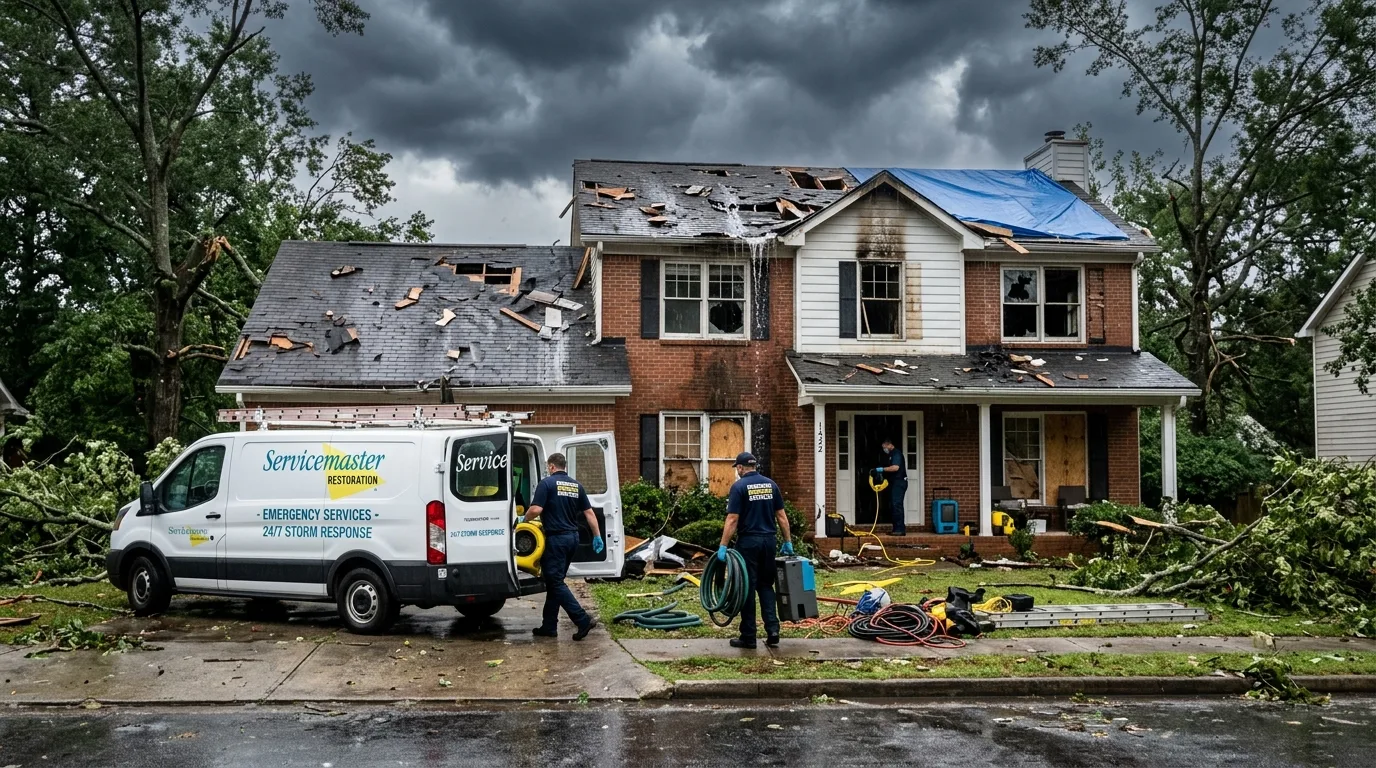
Tucker, GA sits in a storm environment that homeowners should understand before severe weather arrives, not after. The area carries a 50% above-average tornado risk compared to the national baseline, receives more than 50 inches of annual rainfall concentrated in spring and summer, and faces hurricane-related rainfall events that deliver significant rain totals from Gulf Coast storm systems even without direct landfall. When severe weather hits Tucker — whether a spring line storm, a summer thunderstorm flood, or a tornado — the response in the first hours determines how much of the damage is recoverable versus permanent. This post covers what to do immediately after a storm hits your Tucker home, how storm damage restoration works, and what to expect from the recovery process in DeKalb County.
Storm Hit Your Tucker Home? Call Immediately
Tucker Water Damage Restoration provides 24/7 emergency storm response. Call (888) 376-0955 as soon as the storm passes.
Understanding Tucker’s Storm Damage Risk
Storm damage restoration in Tucker, GA addresses a combination of damage types that rarely occur in isolation. A significant storm event typically produces:
Wind damage: Roof damage (missing shingles, lifted flashing, damaged fascia), broken windows, downed trees or limbs. Wind damage creates immediate water intrusion points that must be secured before subsequent rain events enter.
Flash flooding: Tucker’s clay soil and the surface drainage characteristics of established neighborhoods mean that heavy rainfall quickly overwhelms storm drain capacity and generates surface flooding that can enter homes through low-grade openings, doors, and windows.
Foundation flooding: Saturated soil after a storm maintains hydrostatic pressure against basement walls for days after the rain stops. Properties in the Henderson Mill area and throughout DeKalb County that don’t have functioning basement drainage systems experience delayed water intrusion from soil moisture even when direct flooding wasn’t the primary event.
Hail damage: While less common than wind or flood, significant hail events can compromise roof membrane integrity, siding, and exterior HVAC equipment, creating water intrusion pathways that manifest days or weeks after the storm.
Tornado damage: Tucker’s above-average tornado risk means that structural damage from rotational winds — roof removal, wall compromise, total structural failure in severe cases — is a real possibility, not a theoretical one.
What to Do Immediately After a Storm in Tucker
Safety first: Do not enter a structurally compromised building. If a tornado or severe wind event has affected your Tucker home, have the structure assessed for safety before entering. Gas leaks from storm-damaged appliances or lines require immediate utility notification and evacuation.
Document the damage before touching anything. Walk the exterior and photograph all damage from outside before entering. Document the roof condition from ground level, broken windows, damaged siding, and any downed trees in contact with the structure. Inside the home, photograph all areas showing water entry, ceiling collapse, or structural damage before any cleanup begins.
Emergency stabilization — tarp and board up. Roof openings, broken windows, and damaged exterior walls must be temporarily secured to prevent additional rain intrusion. Emergency tarping over roof damage stops the clock on further water infiltration. Call Tucker Water Damage Restoration at (888) 376-0955 immediately — we provide 24/7 emergency tarping and board-up for Tucker and surrounding DeKalb County communities.
Address standing water immediately. If storm flooding has entered the home, water extraction should begin within hours of the storm’s passage. Tucker’s humid climate accelerates both structural damage and mold development — water sitting in a home for 24 hours after a storm event creates measurably worse outcomes than water extracted within the first 6 hours.
Notify your insurance company. Open the claim immediately — do not wait until you have a complete picture of the damage. Insurance companies expect storm claim notifications promptly and may use delayed notification as a basis for reducing coverage on subsequent damage that occurred after the storm.
Storm Damage Cleanup in Tucker — 24/7 Emergency Response
Call (888) 376-0955 immediately after storm damage. We tarp, extract, and restore Tucker homes and businesses throughout DeKalb County.
Storm Damage Restoration Process for Tucker Homes
Professional storm damage restoration in Tucker follows a structured process that differs from standard water damage restoration primarily in the emergency stabilization phase:
Emergency stabilization (day 1): Tarping and board-up to prevent further weather intrusion. Tree removal and debris clearing to restore safe access to the property. Structural safety assessment to determine whether the home is safe for occupancy during restoration.
Water extraction (day 1–2): High-capacity extraction units remove flood water, rain intrusion from roof damage, and any other water that entered during the storm. Tucker’s spring and summer storms can introduce water from multiple sources simultaneously — roof leaks, wall intrusion, and foundation flooding are addressed in parallel.
Damage documentation (day 1–2): Comprehensive thermal imaging and moisture mapping of all affected areas. This documentation is the foundation of the insurance claim and must be completed before any cleaning or demolition begins.
Structural drying (days 2–7): Commercial air movers and dehumidifiers achieve target moisture levels in structural materials. Tucker’s post-storm humidity environment requires powerful commercial-grade desiccant or refrigerant dehumidification — consumer units cannot achieve the moisture removal rates necessary for structural drying timelines that prevent mold.
Material removal (days 3–7): Saturated drywall, insulation, flooring, and other materials that cannot be dried in place are removed and disposed of properly. This phase opens walls and ceilings to allow dehumidification equipment to access hidden saturation.
Reconstruction (weeks 1–8): Structural repairs, roofing replacement, drywall, flooring, and finishes restore the property to pre-loss condition. DeKalb County permits are required for all reconstruction work under the 2024 ICC codes. We coordinate all permitting and inspection as part of the restoration project.
Practical Uses: Common Tucker Storm Damage Scenarios
Spring thunderstorm — roof leak into attic and master bedroom ceiling: Wind-lifted shingles allow 2 inches of rain to saturate attic insulation and ceiling drywall across 400 sq ft. Emergency tarp within 2 hours prevents additional intrusion. Mitigation: $1,600–$2,100. Ceiling drywall and insulation replacement: $2,000–$4,000. Roofing repair: $1,500–$4,000.
Line storm — flash flooding, 2 inches standing water in basement: Category 2 floodwater (storm runoff carries contaminants). 800 sq ft affected. Mitigation: $3,200–$5,200. Flooring and drywall replacement: $4,000–$8,000.
Tornado wind event — partial roof damage, window failures: Roof decking exposed over garage and bedroom area. Emergency tarp and board-up. Interior rain intrusion into 600 sq ft. Structural engineering assessment required. Total restoration scope: $15,000–$45,000 depending on structural damage extent.
Hurricane rain event — 5-inch rainfall over 24 hours, foundation flooding: Red clay soil completely saturated, hydrostatic pressure drives basement flooding through foundation walls. 1,000 sq ft finished basement. Mitigation: $4,000–$12,000 depending on water category. Reconstruction: $8,000–$20,000.
Frequently Asked Questions
Does homeowners insurance cover all storm damage in Tucker?
Standard homeowners’ insurance covers sudden storm damage — wind, hail, lightning, and resulting rain intrusion through storm-damaged openings. It does not cover flooding from surface water or rising groundwater — that requires separate NFIP or private flood insurance. Gradual damage from a known roof deficiency that existed before the storm may be disputed. Document all damage thoroughly and file claims promptly.
How soon after a Tucker storm should I call for restoration help?
As soon as the storm passes and it is safe to be outside. Do not wait until the next business day — water extraction and emergency tarping completed within hours of a storm event save significant additional damage compared to waiting overnight. Tucker Water Damage Restoration is available 24/7 for storm emergency response.
Can I wait a few days to start restoration after storm damage in Tucker?
No. Tucker’s humid climate means that every day of delay allows structural moisture to deepen, increases mold risk, and reduces the recoverability of structural materials. A 3-day delay in beginning extraction and drying after a storm flood event in summer typically converts a drying-in-place scenario into a full material removal and replacement scenario — significantly increasing total cost and timeline.
Tucker Storm Damage Restoration — Call (888) 376-0955
24/7 emergency storm response for Tucker and all of DeKalb County. We tarp, extract, dry, and restore.
Related: